
IN THIS ISSUE:
- Trees Illegally Logged for Wind Power
- Cold Kills More People than Heat in the United States, New Study Finds
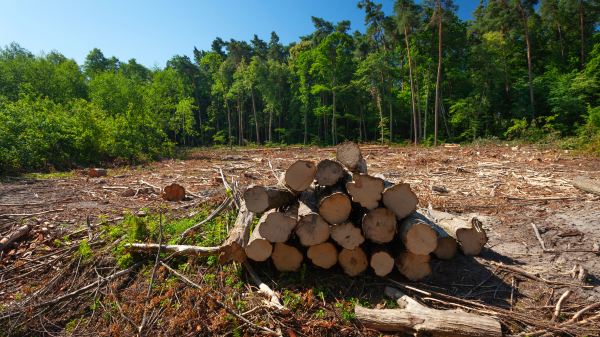
Trees Illegally Logged for Wind Power
I have detailed in previous Climate Change Weekly posts various harmful environmental impacts the development of large industrial wind facilities imposes wherever they are erected. These include the amount of wilderness and viewsheds disrupted, massive bird and bat kills, the shedding of tons of composite materials from blade-edge erosion, ocean disruptions, the toxins released in mining for rare earths, and the mountains of waste generated. A recent investigative report from The Daily Sceptic exposed an additional environmental harm the wind industry is contributing to: Amazon deforestation.
Balsa wood is a key component of wind turbines, a near-perfect material for them. The wood is used primarily as a core material within a sandwich structure, thanks to its unique combination of being extremely lightweight yet remarkably strong and rigid. Its cellular structure provides excellent structural integrity, stiffness, and fatigue resistance, essential for massive, long-lasting blades that flex in high winds.
The problem is parts of the Amazonian rain forest are being denuded to supply the growing demand for balsa wood. Aside from the impact on the Amazonian ecosystem and the biodiversity therein, the net impact on carbon dioxide levels (if one is worried about that) may be a push: balsa trees, a carbon sink, are being cut down to reduce carbon dioxide emissions by shifting to “nonpolluting” wind power in energy use, a disputed proposition at best, all things considered.
Chris Morrison, The Daily Sceptic’s environmental editor, found,
Over half a million balsa hardwood trees are being illegally logged in the Amazon rainforest every year to feed the massive demand for wind turbines in many parts of the world. Balsa is a lightweight but strong wood that is commonly used in the core of giant turbine blades. It can make up around 7% of the blade and each set of three can use up to 40 trees.
Most of the balsa wood is logged illegally and unsustainably, Morrison found, meaning the trees are not replanted in consistent fashion. The logging is of the slash, burn, and move on variety.
“Most commercial balsa is exported by Ecuador, and it has produced approximately 500,000 cubic meters annually in recent years, or about 80,000 metric tons,” reports Morrison. “Around 55% of production is thought to end up in wind turbines … [b]ut since the turn of the decade, this sustainable harvest cannot keep up with demand.
“In a damning survey, the Environment[al] Investigation Agency (EIA) found that exports were boosted by up to 50% following illegal logging in virgin rainforest,” Morrison writes. “The areas under attack were noted to be some of the last intact forest landscapes in the country. They were said to be unique protected areas and emblematic indigenous territories.”
Due to criticism of the ecological impact of deforestation for wind turbines, blade manufacturers are trying out replacements for balsa wood, such as synthetic polymer foam substitutes. However, hybrid designs still incorporate tons of balsa because of its nearly unmatched strength-to-weight ratio, especially in areas experiencing high shear and consistently high wind speeds, where balsa maintains an advantage of stiffness and flexibility. It bends but doesn’t break.
Source: The Daily Sceptic

Cold Kills More People than Heat in the United States, New Study Finds
A study recently published in the peer-reviewed American Journal of Preventive Cardiology confirms what dozens of other large-scale studies have found: the rate of deaths related to non-optimum temperatures is falling as the climate modestly warms, because cold temperatures kill far more people annually than non-optimum warm temperatures.
The study of premature temperature-related deaths in the United States was a collaborative effort of 10 different researchers working out of hospitals, universities, and research centers in New York, Ohio, and Texas. The introduction to their study states,
[N]on-optimal temperatures were estimated to account for nearly 90,000 deaths annually in North America between 2010 and 2019, with the vast majority attributable to cold exposure. … [I]n this study, we evaluated the association between monthly mean ambient temperature and CVD mortality at the county level across the United States from 2000 to 2020.
Specifically, they gathered and aggregated county-level cardiovascular disease (CVD) mortality data across the United States from January 2000 through December 2020, comparing it to temperature data from the Oregon State University’s PRISM Climate Group, with the daily values being averaged to derive the monthly mean temperature for each county. The researchers excluded data from counties missing more than five months of CVD data.
The resulting data encompassed approximately 81.9 percent of the U.S. population over 25 years old, and the team analyzed 14,180,068 cardiovascular deaths that occurred between 2000 and 2020. After teasing out other confounding factors and comparing deaths to temperature records, the researchers found an estimated 2,242 CVD deaths over the 20-year period could be attributed to non-optimal heat each year, compared to approximately 42,735 CVD deaths tied to cold annually on average, amounting to about 19 times more deaths attributable to cold temperatures than hot. “The corresponding annual mortality rates were 1.3 [deaths] for heat and 25.6 [deaths] for cold per 100,000 person-years,” the report states.
This is consistent with multiple other studies cited by Climate at a Glance and Climate Realism, which indicate cold kills far more people in the United States and across the world than hot temperatures: 10 to 20 times more, depending upon the study.
For instance, a 2021 study published in the prestigious medical journal The Lancet reported cold temperatures contribute to far more deaths each year than warmer temperatures and that temperature-related deaths are declining globally, with such deaths dwindling substantially over time as the Earth has modestly warmed.
That study was arguably the largest of its kind on the topic of temperature-related deaths. Sixty-eight scientists representing universities and research institutes in 33 countries spanning all regions of the world contributed to the study. Their research found that as the Earth has modestly warmed, deaths caused by “non-optimal” hot and cold temperatures have declined dramatically. Globally, almost 600,000 people die from heat, and 4.5 million from cold, each year.
Other large-scale studies of U.S. and global populations published in The Lancet and the Southern Medical Journal, and by the Centers for Disease Control and National Health Statistics Reports, have come to the same conclusion.
Cold, not heat, is the biggest temperature-related health threat.
Sources: American Journal of Preventive Cardiology; Jo Nova; Climate at a Glance